

For expectant mothers in North London, maintaining strength is not just about fitness—it is a physiological necessity. During pregnancy, the increase in the hormone relaxin (elastin) and changes in body weight significantly raise the demands for joint stability. At our Tufnell Park studio, we provide specialist Reformer protocols to help you adapt to these shifts safely and effectively.
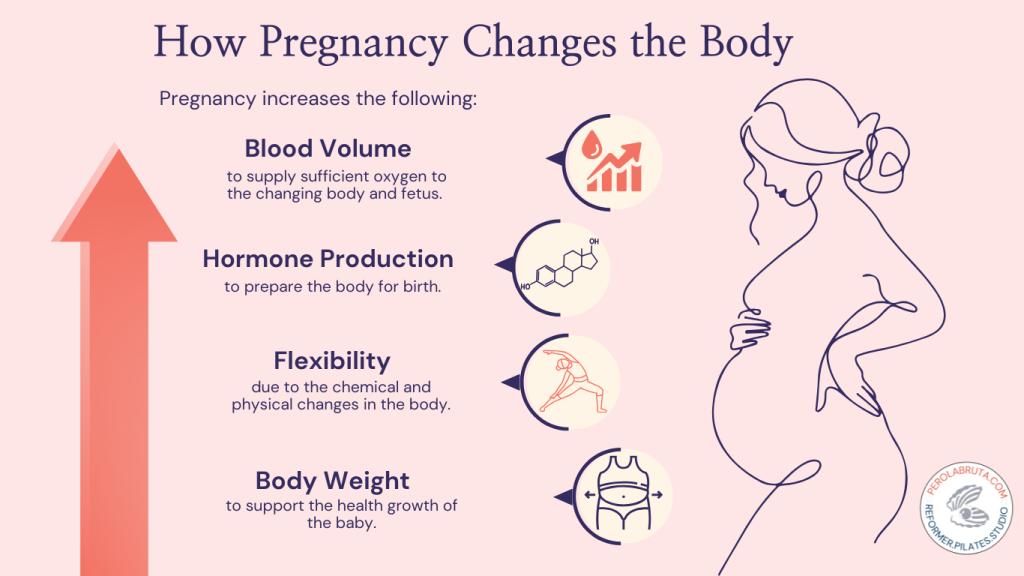
The changes pregnant women experience are both biochemical (ie. increase in blood volume, hormone production) and physiological. These result in increase in:
a. flexibility (due to elastin hormone) and
b. body weight.
These 2 changes raise the demands for stability in the joints.
To stabilise their joints pregnant women need to do strengthening exercises. In this article I will cover the 3 areas I always address with my pregnant clients.
While traditional ‘ab work’ is contra-indicated for much of the nine months, core integrity is vital. We move beyond traditional formats to focus on deep-system stability. Our clients from Highgate and Islington utilize the Reformer to strengthen the transverse abdominis safely, which is the best defense against common complications like diastasis recti or pelvic floor dysfunction.
The integrity of your spine depends heavily on the glutes and lower back muscles. A simple way to assess your current stability is to stand barefoot and notice where you bear your weight. If you feel it shifting heavily into your heels or the outer edges, your postural foundation is changing. At Perola Bruta, we use the Reformer to re-balance this distribution, protecting your lower back as your center of gravity shifts.
2 things to consider:
i. Provided there is no issue with dizziness, lower back and glute work should be practiced not just lying down but standing as well. This will help integrate the function of the foot with the midsection.
ii. Inner thighs work synergistically with the gultes and lower back muscles. While inner thighs tend to be overlooked they are as important for core strength as the abs and glutes.
A lot of caution needs to be applied when it comes to abdominal training during pregnancy, yet the new mother needs not to be afraid of strength work that involves the obliques and transversus abdominis.
The main focus of ab training should be for the obliques and transverse abdominis.
Attention:
Abdominal work during pregnancy should be performed mostly standing or lying sideways. Spine flexion should be avoided throughout pregnancy.
Aches in the legs and feet are not uncommon during pregnancy. Especially when the new mother carries extra weight, which is the case in twins, she will be even more prone to long term problems including collapsed arch and knee injuries.
Reformer pilates is a low impact form of exercise allowing pregnant women to keep their legs strong without excess burden in the joints.
The foot function determines: our walking gait, knee and hip function as well as our posture. For that reason it is useful when practicing exercises for the legs to combine them with foot work. Bands, spin boards, and other specialised equipment can be used to increase the recruitment of the feet while performing reformer exercises.
The additional weight in the mother’s belly will change the demands in her muscles during the 9months of pregnancy. The muscles in the back of her body will need to work harder in order to keep her posture upright.
Avoiding strength work for the back muscles, glutes and hamstrings may lead to compromised posture and potentially excess sensitivity in the lower back. An easy way to assess if that is currently happening is to:
Stand upright barefoot (feet hip distance) and notice in which part of the feet you are baring most of the weight.
Is your weight distributed evenly between the 3 corners of the feet?
Surprising as it may be to some, shoulder work is very important for pregnant women. Neck and shoulder blade pain can cause frustration and even disrupt their sleep and in order to be addressed the deltoids, rotator cuff, lats and traps need to strengthen.
While aches and pains in the upper back often takes place during pregnancy due to compromised posture from the growing belly these problems don’t disappear after delivery. New mothers have to carry their babies for the first few years of life which can be a challenge for their shoulders, wrists and back.
Reformer Pilates is often often the choice of preference among pregnant women that seek to stay strong during this special period of their life. The 3 areas they need to be address to accommodate for the changes their body undergoes are:
1. Glutes and lower back
2. Legs and feet
3. Shoulder joint and arms
In a group prenatal class in Camden or N19, it is impossible for an instructor to monitor the subtle changes in your joint laxity week-by-week. At Pérola Bruta, our 1:1 sessions mean your program evolves as your pregnancy does, ensuring you are never pushed into a range of motion that is unsafe for your current stage.
Looking for expert prenatal strengthening in North London? Visit our private studio in Tufnell Park. We serve mothers-to-be from Highgate, Hampstead, and Kentish Town.