-
Founder of Perola Bruta, rehabilitation and strength specialist and published author, with 20 years of experience helping people move without pain.
Reformer Pilates Pros and Cons: Benefits and Disadvantages Explained
The rising popularity of Reformer Pilates is no coincidence. The benefits of Reformer Pilates range from toning, better posture and injury rehabilitation. That’s not to say though that there are no limitations.
In this article I will cover the biggest pros and cons of reformer pilates to help you decide if it is the right form of exercise for you.
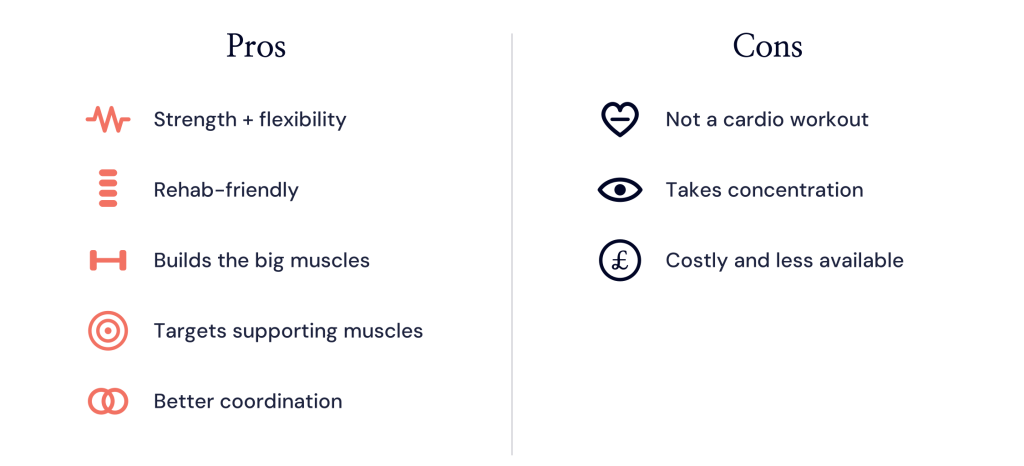
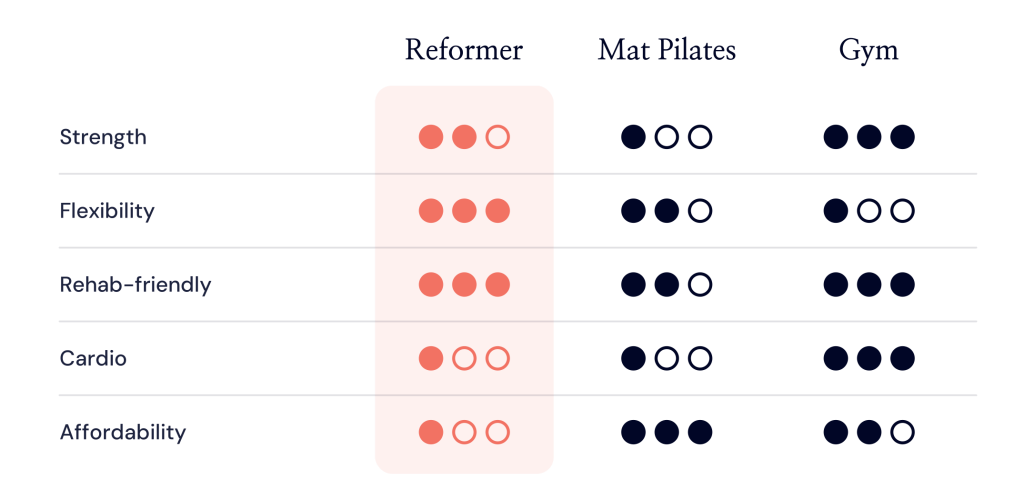
Reformer Pilates builds strength and flexibility at the same time, suits almost any rehabilitation programme and works the muscles other training misses. Its main downsides are that it isn’t cardio, it takes concentration to do well, and it costs more than most other forms of exercise.
5 reasons to start Reformer
Addresses strength and flexibility at the same time
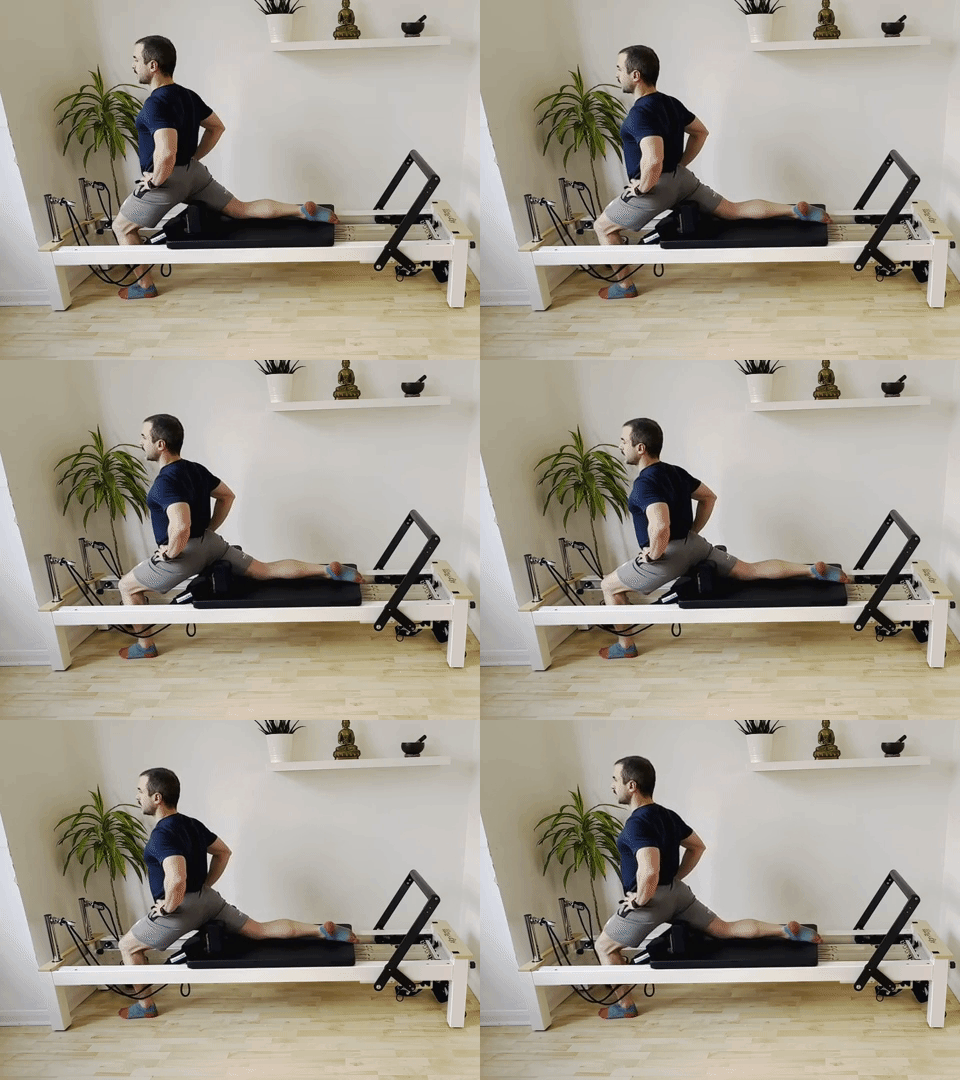
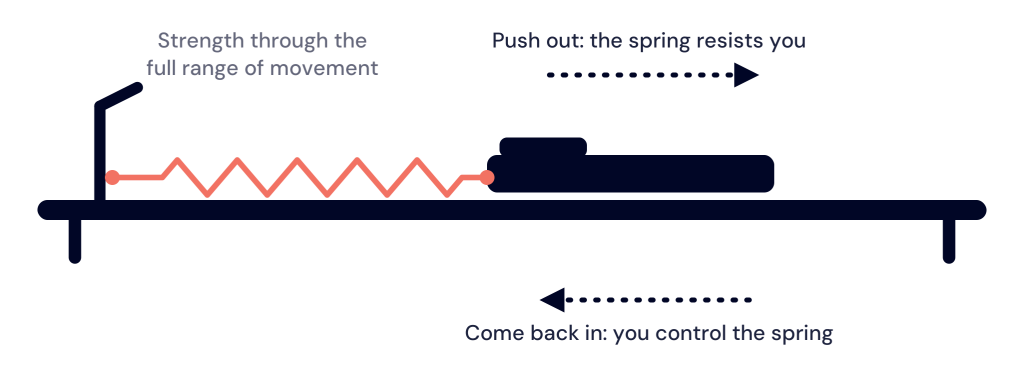
Strength and flexibility are often perceived as a zero-sum game. The reformer machine allows us to stretch our muscles through a big range of movement, while contracting the opposing muscles when the resistance of the springs resist the movement (eccentric phase). In this instance the body is getting stronger and more flexible at the same time.pilates props.
So assuming you have the space at home and you decide to save money buy purchasing the equipment yourself, you are looking at an investment of £3-7,000.
When the resistance obstructs the movement we need to recruit muscles that could otherwise stay passive when stretching.
When the resistance assists the movement we are able to achieve a deeper stretch than otherwise.
Accommodates 90% of all rehabilitation programs
While other forms of body weight exercise are limited in accommodating a rehabilitation program, in a reformer we can perform most exercises suggested by physiotherapists and osteopaths. Of course an ounce of prevention is worth a pound of cure, so anyone with sensitivity in joints or lower back pain will benefit immensely by practicing reformer prior to the injury becoming acute or chronic.
Strengthens the big muscles
It is no secrete that yoga and mat pilates are limited in regards to how strong they can make one’s body. This is particularly true for the lower body and back muscles, or let’s say in general the big muscles (including the glutes). So if you are allergic to lifting weights or the gym environment, the reformer machine can help you get strong.
Isolate supportive muscles
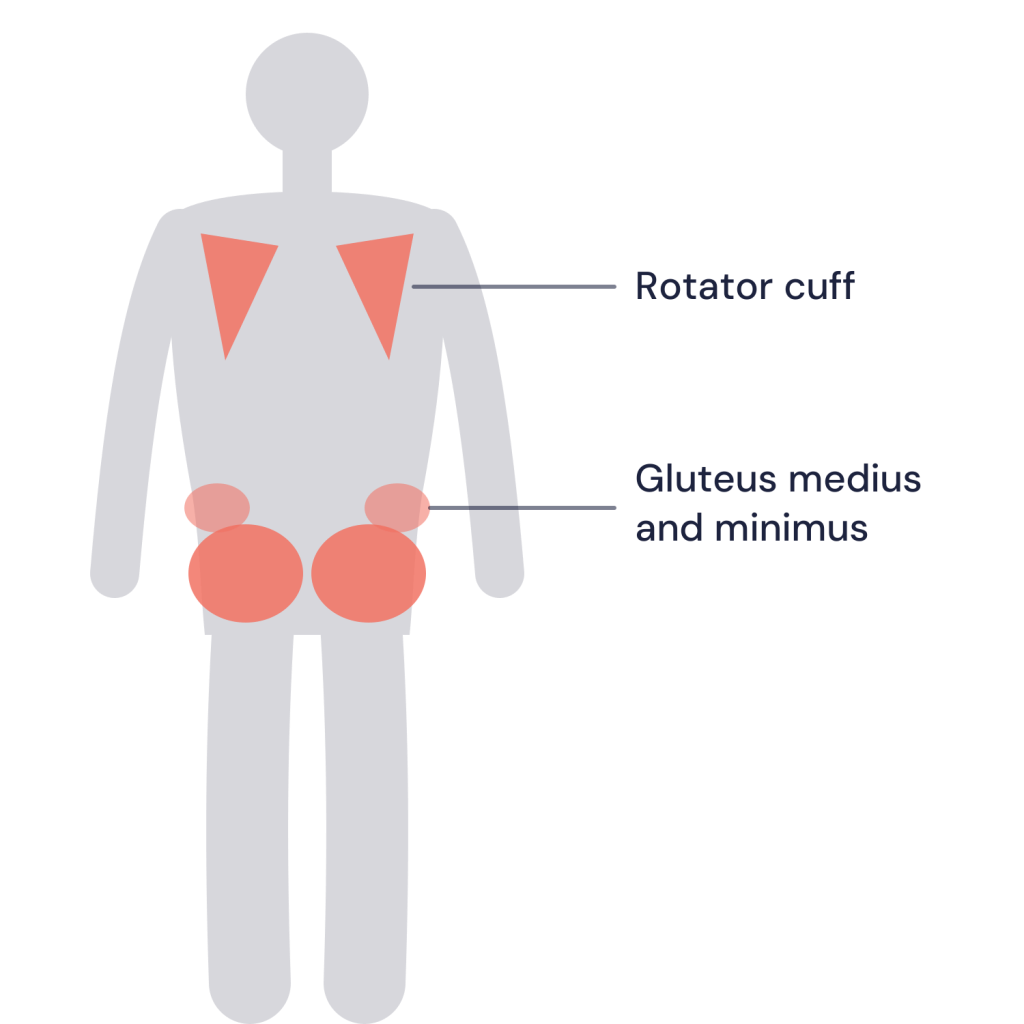
Gluteus minimus and rotator cuff are 2 groups of muscles that help us stabilise hips and shoulder joints respectively. The reformer allows us to target these muscles and reduce the chance of an injury.
Dissociate body parts
When performing compound movements (ie. running, weightlifting, yoga) our body will utilise the muscles it’s most comfortable recruiting. While for the most part this is normal and safe when someone has signifiant imbalances this can cause the imbalances to get more pronounced and potentially cause injury. Two areas of the body which can dissociate and coordinate when practicing reformer are: our Core + Legs: when performing flexibility exercises for our lower body
and the core + arms: when strengthening our upper limbs.
3 limitations of Reformer Pilates
These are the limitations of the method itself. For the practical problems people run into, such as cost, time and finding the right instructor, and how we solve them, read The 7 Big Problems of Reformer Pilates.
Poor form of cardiovascular training
Although the speed of a reformer class can vary, it is unlikely that it will keep HR elevated for prolonged periods. To the extent that you don’t treat reformer as cardio that’s fine.
Proper execution requires concentration
While this holds true for all forms of exercise it is particularly relevant in Reformer Pilates as, the postural alignment needed in combination with the use of the springs, straps and carriage can be a lot for those starting out.
So, is Reformer Pilates hard? For the first few sessions, it can feel like a lot to think about. Most people find their rhythm within a handful of classes, and one-to-one sessions make that learning curve much shorter.
More exclusive than other forms of training
Reformer machines are not cheap and due to the specific training instructors have to undergo, there are not many available. Both factors make Reformer Pilates classes exclusive.
If you’re wondering why it costs what it does, we explain it in Why Is Reformer Pilates So Expensive?
Is Reformer Pilates Strength Training?
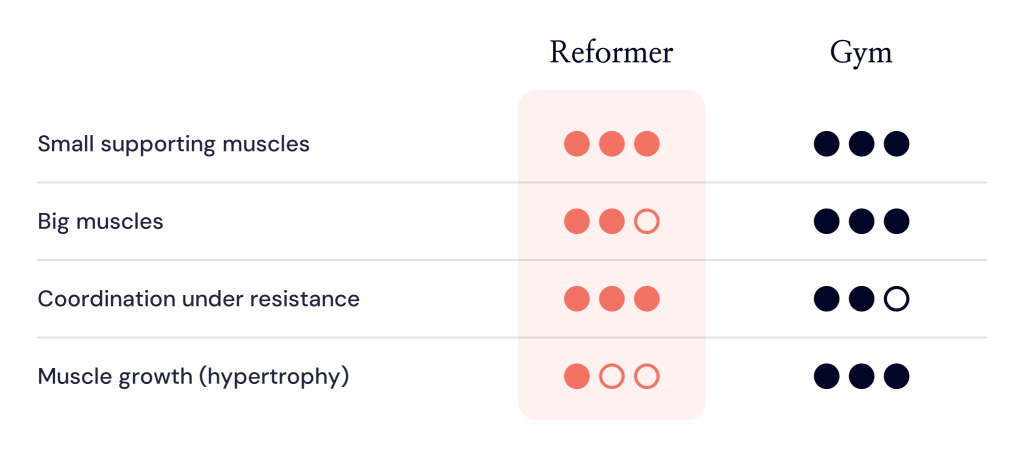
Reformer Pilates can’t match the resistance of machines and free weights at the gym. But with a high-repetition approach you can still fatigue your muscles, which is why it’s so efficient at targeting the smaller, supporting ones. Even the big muscles, like the lats, quads and glutes, can be targeted with the right exercises and some extra resistance from bands.
If absolute strength is your only goal, Reformer Pilates lags behind a gym workout. If building muscle size (hypertrophy) isn’t a big priority for you, it’s a sufficient form of strength training. Whether it can change your physique is something I cover in how Reformer Pilates changes your body, and you’ll find a head-to-head comparison in Reformer Pilates vs Weights.
Reformer vs Mat Pilates: Which Is Better?
The exercises are the same, but on the Reformer the springs and straps can either support or challenge every movement, so the possibilities are endless. That’s how the Reformer bridges the gap between mat Pilates and the gym.
Is Reformer Pilates Good for Weight Loss?
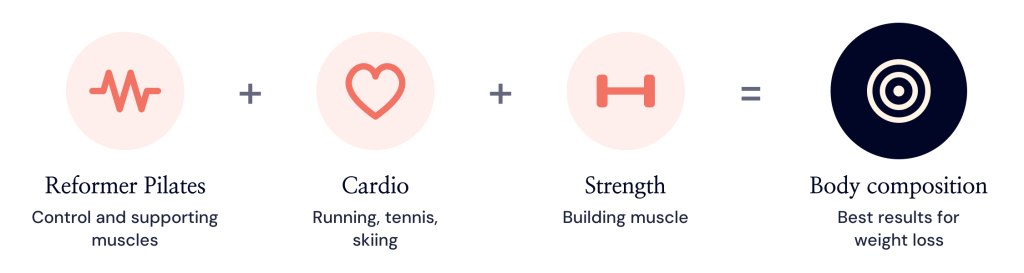
Cardio is only a small part of Reformer training, which limits how much it can help with weight loss. Its two biggest limitations here are that cardio is limited, and that strength, and therefore muscle growth, is limited too. The more muscle you build, the more you shift your body composition, which is usually what people really mean by weight loss.
That doesn’t mean Reformer Pilates can’t support other activities, like running, tennis and skiing. A combination of different types of exercise is usually the best approach to weight loss anyway. Read more in how Reformer Pilates changes your body.
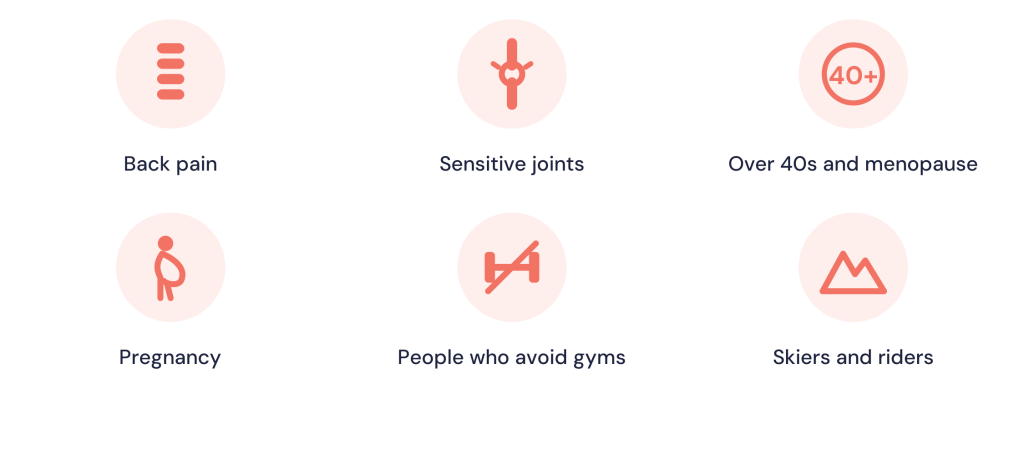
Who Is Reformer Pilates For?
Almost anyone, but it’s particularly valuable if you: